New Dog, Who Dis? The Smart Owner's Guide to Frenchie First Meetings
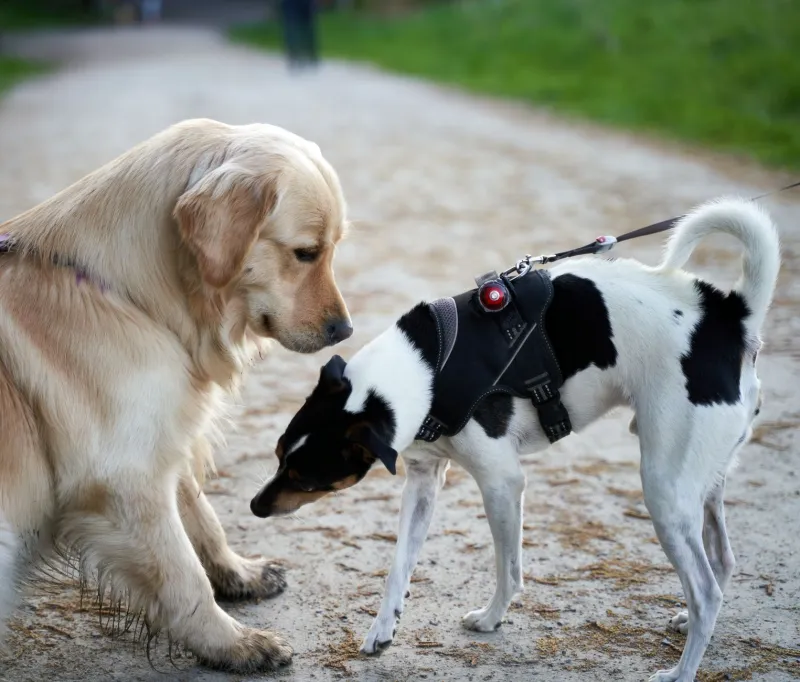
Every Frenchie owner has been there. You're at a dog park, a community event, or a friend's backyard cookout, and someone walks in with a dog you've never seen before. Your Frenchie spots them. Their whole body shifts. And suddenly you're holding your breath, trying to remember everything you've ever read about dog introductions while simultaneously trying to look casual.
Here's the thing — first meetings between dogs don't have to be stressful. They just require you to pay attention, set the right conditions, and resist the very human urge to rush the process.
Know What You're Actually Looking At
Before we talk about tactics, let's talk about language — specifically, the kind your dog is speaking constantly and most people are only half-reading.
French Bulldogs, like all dogs, communicate through body posture, facial expression, tail position, and movement. The challenge is that Frenchies have some anatomical quirks — short tails, flat faces, upright ears — that can make their signals slightly harder to read than those of, say, a Labrador. But they're still there.
Signs your Frenchie is feeling good about a new dog:
- Loose, wiggly body movement (the whole back end swings, not just the tail)
- Play bow — front end drops, rear stays up, often accompanied by a little bounce
- Soft, squinty eyes
- Sniffing with a relaxed posture
- Taking turns — approaching, then moving away, then coming back
Signs something is off:
- Stiff, rigid body posture
- Tail held very high and moving in tight, fast wags (this is not always friendly — context matters)
- Hard, unblinking stare
- Hackles raised along the spine
- Lip curling, even subtle
- Whale eye (you can see the whites of their eyes)
- Excessive yawning or lip-licking in a high-stress context
None of these signals in isolation means disaster, but they're information. When you see them, slow things down.
Set the Scene Before the Meeting Even Happens
The biggest mistake people make with dog introductions is letting them happen on the fly with no forethought. You pull up to the dog park, you unclip the leash, chaos ensues. That's not a meeting — that's a situation.
When you have any control over the circumstances, use it.
Neutral territory is everything. Dogs are territorial, and even the most easygoing Frenchie can get weird about their own space. If you're introducing two dogs who will be spending time together regularly — a new family dog, a friend's pup, a potential playdate partner — do the first meeting somewhere neither dog has claimed. A quiet side street, an empty park section, a neighbor's yard.
Parallel walks before face-to-face contact. This is one of the most underutilized tools in the intro playbook, and it works remarkably well. Walk the two dogs side by side (with their respective owners, keeping comfortable distance) before you ever let them meet nose-to-nose. It lets them get used to each other's presence, smell each other from a distance, and burn off some of that initial adrenaline. By the time you close the gap, they've already been "introduced" in a low-pressure way.
Keep leashes loose when they do meet. A tight leash communicates tension directly into your dog's body. If you're gripping hard because you're nervous, your Frenchie feels that. Loosen up — and if you can't, take a breath first.
Reading the Room at Dog Parks and Community Events
Dog parks are a different beast. You don't control who shows up or how their dog behaves. That means you need to be your Frenchie's advocate in a more active, ongoing way.
Before you enter, watch the park for a few minutes. Is the energy chaotic? Is there a dog that's been bullying others? Are there size dynamics that worry you? You're allowed to decide today's not the day. That's not overprotective — that's smart.
Once inside, stay engaged. This isn't the time to scroll your phone. Watch your dog. Watch the other dogs. Know where your Frenchie is at all times.
Intervene before things escalate. If you see your dog getting overwhelmed — hiding behind your legs, trying to leave the group, being relentlessly chased — step in. Call your dog to you, redirect, take a short break outside the gate. There's no shame in it.
Not every dog your Frenchie meets needs to become a friend. Some dogs just don't click. That's fine. A polite sniff and a mutual decision to go separate ways is a completely successful interaction.
The Playdate Setup: When You Want It to Actually Go Well
If you're planning a structured playdate — say, your Frenchie and a friend's dog — you have the luxury of doing it right.
- Keep the first session short. Thirty to forty-five minutes is plenty. End on a good note before anyone gets tired or overstimulated.
- Remove high-value resources. Food bowls, bones, favorite toys — put them away before the other dog arrives. Resource guarding is real, and removing the trigger removes the risk.
- Have an exit strategy. Know ahead of time how you'll separate the dogs calmly if things go sideways. Don't wait until you need a plan to come up with one.
- Decompress afterward. After a social interaction, give your Frenchie some quiet downtime. Socialization is genuinely tiring, and a calm afternoon post-playdate is a gift.
When to Call It and Walk Away
Sometimes, despite your best efforts, a meeting just doesn't work. Maybe the other dog is too intense. Maybe your Frenchie is having an off day. Maybe there's a genuine incompatibility.
Leave. Calmly, without drama, without making your dog feel like they did something wrong. Not every social situation is worth pushing through, and your Frenchie trusts you to make that call.
The goal isn't a dog that tolerates every other dog they meet. The goal is a dog that has positive social experiences, builds confidence over time, and knows their owner has their back. That's what good introductions build — not just friendships, but trust.